
What Are Exosomes in Skincare?
Exosomes have become one of the most discussed topics in advanced skincare, regenerative aesthetics and modern dermatology.
They are often described as “cell messengers” because they carry biological signals between cells.
That description is directionally useful, but the science is more complex.
Exosomes are tiny extracellular vesicles released by cells. They can carry proteins, lipids, RNA and other signalling molecules that influence how neighbouring cells behave.
Because of this, exosomes have attracted strong interest in areas related to skin recovery, tissue signalling and visible skin rejuvenation.
But what does that actually mean for skincare?
What Exactly Are Exosomes?
Exosomes are microscopic membrane-bound vesicles released by many different types of cells.
They are part of a broader group known as extracellular vesicles.
Their role is not simply to act as waste particles.
Instead, they can carry biological information from one cell to another.
This cargo may include:
- proteins
- lipids
- messenger RNA
- microRNA
- signalling molecules
This ability to carry biological signals is one reason exosomes have become an important area of research in regenerative medicine and aesthetic dermatology.
Why Are Exosomes Being Used in Skincare?
Skin ageing is influenced by many factors.
These include:
- UV exposure
- oxidative stress
- reduced collagen production
- changes in elastin
- slower cellular turnover
- dehydration
- barrier disruption
- environmental stress
Because exosomes are involved in cell-to-cell communication, researchers are interested in whether exosome-derived signals may help support processes associated with healthier-looking skin.
This includes potential effects relating to:
- skin texture
- firmness
- elasticity
- visible signs of ageing
- recovery from environmental stress
- overall skin quality
However, this area of skincare is still developing.
Not every product labelled “exosome” is necessarily equivalent.
Are Exosomes the Same as Stem Cells?
No.
This distinction is important.
Exosomes are not living cells.
They are tiny vesicles released by cells.
Stem cells, on the other hand, are living cells capable of self-renewal and differentiation.
So when a skincare product contains exosome-derived materials, it does not mean the product contains living stem cells.
This is one of the most common misunderstandings in exosome skincare.
How Do Exosomes Work?
The main scientific interest around exosomes comes from their role in cellular communication.
Exosomes can bind to or be taken up by recipient cells and deliver signalling molecules that may influence cellular behaviour.
In research settings, exosome-related signalling has been explored in connection with:
- inflammation regulation
- tissue recovery
- extracellular-matrix activity
- collagen-related pathways
- wound healing
- skin rejuvenation
For cosmetic skincare, however, the important distinction is this:
We are not trying to claim that a topical exosome cosmetic product medically regenerates damaged tissue.
Instead, the relevant skincare interest is whether exosome-derived signalling may help support skin that appears:
- smoother
- firmer
- healthier
- more resilient
- more refined
Can Exosomes Help With Fine Lines?
Potentially, but this should be described carefully.
Fine lines are influenced by several factors, including:
- ageing
- UV exposure
- dehydration
- collagen decline
- repeated facial movement
- environmental stress
Some early clinical and preclinical studies involving extracellular vesicles and exosome-based applications have reported improvements in skin-quality parameters, including wrinkle appearance.
However, many studies differ in:
- exosome source
- purification method
- concentration
- delivery method
- treatment protocol
This makes direct comparison difficult.
So the most accurate position is:
Exosomes are promising for skin rejuvenation, but the evidence base is still developing.
Can Exosomes Support Firmer-Looking Skin?
This is one of the main reasons exosomes are being explored in anti-ageing skincare.
Skin firmness depends heavily on the extracellular matrix.
This includes structural proteins such as:
- collagen
- elastin
As skin ages, changes in this support network can lead to:
- sagging
- reduced firmness
- lower elasticity
- finer skin texture
Exosome research has explored signalling pathways associated with fibroblast activity and extracellular-matrix maintenance.
That makes exosomes particularly interesting for formulations designed to support firmer, more resilient-looking skin.
But again, exosomes should not be treated as a guaranteed lifting treatment.
Do Exosomes Improve Skin Texture?
Potentially.
Texture can be influenced by:
- dehydration
- barrier disruption
- uneven cellular turnover
- environmental stress
- collagen changes
- ageing
If exosome-derived signalling helps support processes linked to skin renewal and extracellular-matrix function, it may contribute to a smoother and more refined-looking complexion.
However, topical formulation remains critical.
A strong exosome skincare product should also support:
- hydration
- barrier function
- moisture retention
- antioxidant defence
Exosomes should not be expected to do everything alone.
What Is the Difference Between Exosomes and PDRN?
PDRN and exosomes are both associated with modern regenerative skincare, but they are very different.
PDRN is composed of purified DNA-derived nucleotide fragments.
Exosomes are extracellular vesicles that carry signalling molecules between cells.
Their mechanisms are different.
PDRN is commonly discussed in relation to pathways such as adenosine A2A receptor activity and nucleotide metabolism.
Exosomes are mainly discussed in relation to cell-to-cell communication and delivery of biological signals.
This is why some advanced skincare formulations combine both.
They may offer complementary mechanisms rather than performing the same role.
For a full overview of PDRN, read:
What Is PDRN in Skincare? Benefits, How It Works & Who It’s For
You can also read:
PDRN for Skin: What Does It Actually Do?
Are All Exosomes the Same?
No.
This is a major point.
Exosomes can differ depending on:
- source material
- manufacturing process
- purification method
- particle size
- concentration
- storage conditions
- stability
- formulation system
Different exosome preparations may therefore behave differently.
This is why consumers should be cautious about comparing products based only on the word “exosome.”
The quality of the raw material and finished formulation matters.
What About Plant-Derived Exosome-Like Vesicles?
Some skincare products use plant-derived extracellular vesicles or exosome-like nanoparticles.
These are not necessarily the same as human-cell-derived exosomes.
They may still have interesting cosmetic applications, but they should not automatically be treated as biologically identical.
Terminology in the beauty industry can sometimes blur these distinctions.
So when evaluating an exosome skincare product, it is useful to understand what type of exosome or extracellular vesicle system is actually being used.
How Are Exosomes Delivered Into the Skin?
Delivery is one of the biggest challenges in topical skincare.
The outer skin barrier is designed to prevent easy penetration of foreign materials.
Exosomes are much larger and more complex than many traditional skincare molecules.
This means formulation technology matters.
Researchers have explored exosome delivery through:
- topical formulations
- microneedling
- laser-assisted procedures
- injectable treatments
- professional aesthetic protocols
Results from professional procedures should not automatically be assumed to apply to ordinary topical skincare.
This distinction is very important.
Are Topical Exosomes Proven?
The evidence is promising, but not yet as mature as ingredients such as retinoids, niacinamide or vitamin C.
Current research suggests potential benefits in areas such as:
- skin rejuvenation
- wrinkle appearance
- tissue recovery
- pigmentation
- skin texture
However, limitations remain.
These include:
- small sample sizes
- different exosome sources
- inconsistent protocols
- variable concentrations
- different delivery methods
- lack of long-term standardized trials
So topical exosomes should be viewed as an emerging technology rather than an established universal solution.
Who May Benefit From Exosome Skincare?
Exosome-based skincare may appeal to people concerned about:
- early signs of ageing
- loss of firmness
- rough texture
- dullness
- reduced skin resilience
- fine lines
- environmental stress
It may also appeal to people looking for more advanced skincare technology beyond traditional hydration products.
Can Exosomes Replace Retinol?
No.
Exosomes and retinoids are very different.
Retinoids have decades of evidence supporting their effects on:
- cell turnover
- fine lines
- photoageing
- collagen-related pathways
Exosome skincare is newer and still evolving.
That does not mean exosomes are ineffective.
It simply means they occupy a different position in skincare science.
For many users, exosomes may be considered part of a broader anti-ageing strategy rather than a replacement for every established active.
Why Formulation Matters More Than the Buzzword
One of the biggest problems in skincare marketing is focusing too heavily on one fashionable ingredient.
Exosomes are no exception.
A strong anti-ageing serum should still address multiple aspects of skin health and appearance.
This may include:
- hydration
- barrier support
- antioxidant protection
- firmness
- elasticity
- texture
- skin tone
That is why exosomes are often more meaningful when incorporated into a multi-active formulation rather than used as a standalone marketing claim.
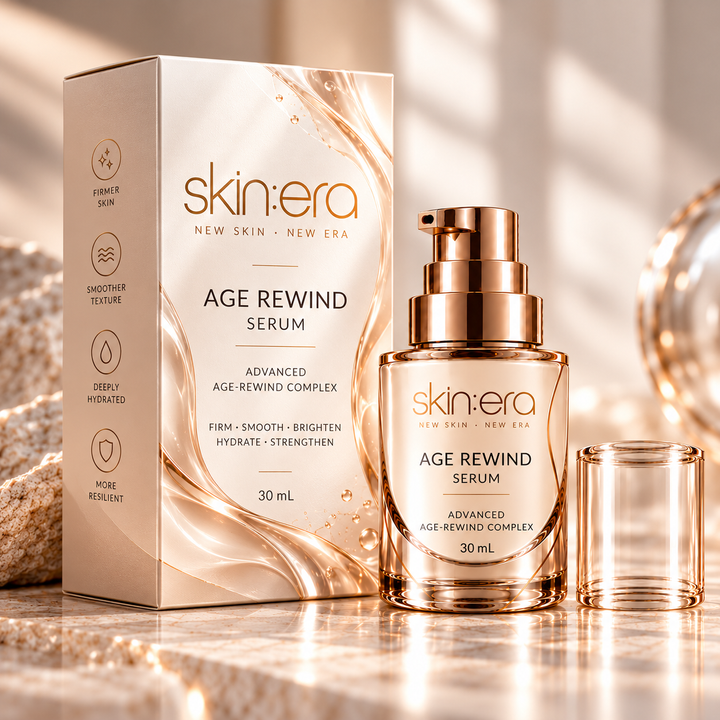
Exosomes in SKINERA AGE REWIND SERUM
SKINERA AGE REWIND SERUM is designed as an advanced anti-ageing serum featuring both PDRN and exosome technology as part of a broader multi-active system.
The formulation is designed to support:
- firmer-looking skin
- smoother texture
- hydration
- skin resilience
- a more refined and youthful-looking appearance
The goal is not to rely on one ingredient alone.
Instead, AGE REWIND combines multiple complementary actives to support several visible aspects of skin ageing.
Explore SKINERA AGE REWIND SERUM:
How to Use an Exosome Serum in Your Routine
For morning use:
Cleanse → SKINERA AGE REWIND SERUM → SKINERA AGE DEFEND FLUID SPF50+ PA++++
For night use:
Cleanse → SKINERA AGE REWIND SERUM → SKINERA AGE RESTORE CRÈME — NIGHT SHIFT
This creates a complete anti-ageing rhythm:
Morning = Treat + Protect
Night = Treat + Restore
The Bottom Line
Exosomes are one of the most interesting emerging technologies in advanced skincare.
Their ability to carry biological signals between cells has made them a major focus of research in regenerative medicine and aesthetic dermatology.
For skincare, their potential lies in supporting processes associated with:
- skin quality
- firmness
- resilience
- smoother texture
- visible rejuvenation
But exosomes are not magic.
Their performance depends on:
- source
- quality
- formulation
- stability
- delivery
- concentration
And the evidence for topical skincare is still evolving.
The most sensible approach is to view exosomes as part of a complete formulation strategy rather than a standalone miracle ingredient.